Building a Digital Foundation: The Essential Guide to a Construction Company Website
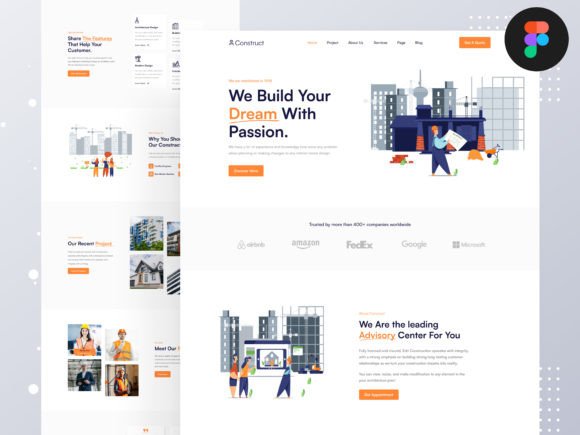
In the modern building industry, your physical portfolio is no longer enough. Whether you are a general contractor managing large-scale commercial projects or a specialized firm offering residential renovations, your digital presence serves as the first handshake with potential clients. A Construction Company Website is not merely an online brochure; it is a critical business tool designed to establish trust, showcase expertise, and streamline communication between your firm and stakeholders ranging from property developers to individual homeowners.
For many construction professionals, the transition from blueprints to web design can feel daunting. The core challenge lies in translating complex project data, safety records, and diverse service offerings into a user-friendly interface that converts visitors into leads. Your goals are clear: you need to demonstrate reliability, highlight your range of services—which may include building consulting, real estate consulting, and financial advisory—and ensure that your brand looks professional on every device. A well-structured website addresses these needs by acting as a 24/7 representative of your company's capabilities.
Why a Specialized Web Presence Matters
The construction sector is highly competitive. When a client searches for "commercial builders" or "investment consultants for real estate," they are often comparing multiple firms simultaneously. A generic or outdated website can inadvertently signal a lack of attention to detail, a trait no client wants in their builder. Conversely, a Construction Company Website built with modern UI principles and unique design elements immediately communicates professionalism and forward-thinking.
One of the primary situations this type of website addresses is the need for comprehensive service display. Modern construction firms rarely stick to just hammering nails; they offer holistic solutions. Your site must effectively categorize and present services such as marketing consulting, advertising consulting, insurance brokering, and accountant services. By organizing these distinct offerings under one cohesive digital roof, you position your firm as a one-stop solution for development projects, reducing the friction for clients who need multifaceted support.
Designing for Trust and Usability
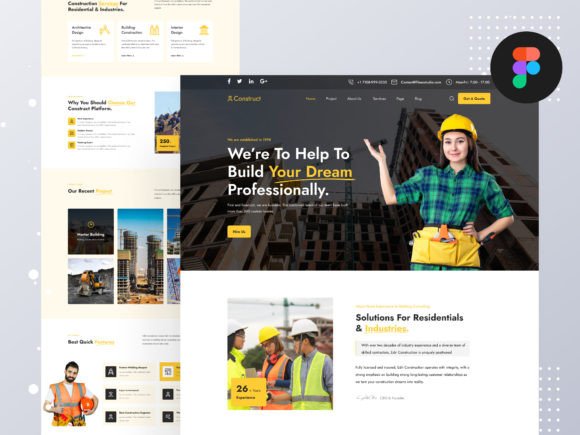
The architecture of your website should mirror the precision of your construction projects. Just as a building requires a solid foundation, your site needs a robust technical framework. Utilizing a system based on Bootstrap or a 1170px Grid System ensures that your content is aligned, readable, and structurally sound. This approach allows for a full-width layout, often extending to 1600px, which provides ample space to display high-resolution images of your completed projects without clutter.
However, aesthetics alone do not drive results. The design must be functional. A Construction Company Website must be fully responsive, meaning it looks awesome and functions perfectly on tablets and mobile devices. Many decision-makers browse for contractors while on-site or during commutes. If your site fails to load correctly on a smartphone, you lose that opportunity instantly. Modern templates often come with predefined web elements that are 100% customizable, allowing you to adapt the look and feel to match your specific brand identity without needing extensive coding knowledge.
Key Features That Drive Success
To truly serve your audience, your website should incorporate specific features that enhance user experience and operational efficiency:
- Vector Customizability: Using vector icons and illustrations ensures that your graphics remain crisp on any screen size, from a small phone to a large desktop monitor.
- Organized Structure: Just as well-organized layers and grouped components are vital in design files like Figma, your live website should have a logical navigation structure. This helps users easily find information about HR consulting, investment consulting, or specific project galleries.
- Modern Typography: Leveraging free fonts from Google Fonts allows you to maintain a minimal, modern design that is easy to read and professionally styled.
- Unique Artboards and Components: Starting with unique artboards means your site won't look like a cookie-cutter template. It allows for a creative and unique design that sets you apart from competitors.
Practical Applications for Different Users
Different stakeholders will approach your Construction Company Website with different intents, and your site must cater to each of them effectively.
For Real Estate Developers and Investors: These users are looking for financial viability and risk management. They will likely navigate directly to sections detailing your financial advisors, investment consultants, and insurance brokers. For this audience, the website should provide clear case studies, ROI projections, and testimonials that speak to fiscal responsibility and strategic planning.
For Homeowners and Small Business Owners: These clients are often driven by visual appeal and trust. They want to see what you have built before. A gallery section powered by amazing vector illustrations and high-quality photography is essential here. They also value clarity in communication, so having accessible contact forms and clear explanations of your building consulting services is crucial.
For Job Seekers and Partners: A professional site also serves as a recruitment tool. When potential employees or subcontractors visit your site to learn about your HR consulting practices or company culture, a well-organized, modern interface suggests a well-run company. It signals that you value quality in all aspects of your business, including your digital footprint.
Implementation and Customization Strategies
Creating a great website layout does not require reinventing the wheel. Many successful firms start with high-quality templates that offer best practices in web development. For instance, utilizing a template made in Figma provides a significant advantage. Figma files are known for being easy to find, with properly named layers and folders, making the handover to developers seamless.
When implementing your site, focus on the following steps:
- Select a Flexible Framework: Choose a base that supports a 1170px grid or Bootstrap system. This ensures scalability as your business grows.
- Customize the Visual Identity: Use the 100% customizable nature of vector files to inject your brand colors, logo, and specific imagery. Ensure that the "Unique Artboards" concept is applied to create distinct pages for each service line, such as separating "Advertising Consulting" from "Accountant Services."
- Optimize for Mobile First: Verify that the tablet and mobile views are flawless. Test all interactive elements, ensuring that buttons for "Get a Quote" or "Contact Us" are easily tappable on smaller screens.
- Content Strategy: Populate the site with meaningful content. Avoid jargon where possible. Explain how your marketing consulting can help a developer sell units faster, or how your insurance brokering protects a homeowner's investment.
The Long-Term Value of a Professional Site
Ultimately, a Construction Company Website is an investment in your company's future. It reduces the time spent explaining basic services to every new lead because the information is readily available and clearly presented. It builds authority in a crowded market, distinguishing you from contractors who rely solely on word-of-mouth.
By adopting a minimal modern design and focusing on user needs, you create a platform that not only showcases your past work but also facilitates future growth. Whether you are providing niche advice as an investment consultant or managing massive infrastructure projects, your website is the bridge that connects your expertise with the people who need it most. With the right tools—such as fully vector-customizable files, organized layers, and a responsive grid system—you can build a digital presence that stands as strong and reliable as the structures you create.